
2026-09-01 ·
Tips for Maintaining Outdoor Lighting on Rural Properties Near Prineville
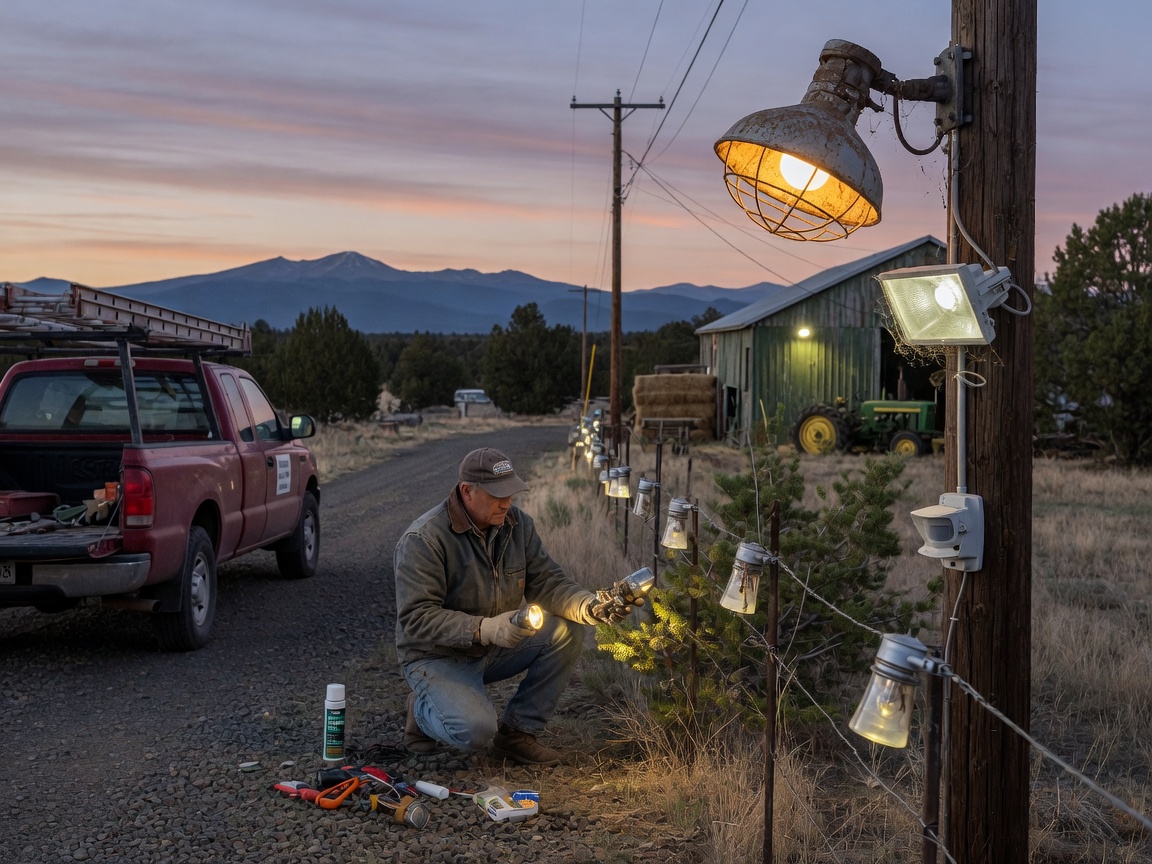
Outdoor lighting on a rural property outside Prineville typically needs a hands-on check twice a year — once before summer heat sets in and once before the first hard freeze — plus a quick visual walk after any major windstorm. Properties out toward Powell Butte, Ranch, or along the rimrock roads near Prineville Reservoir State Park deal with more exposure than in-town lots, so fixtures and wiring take more abuse from sun, dust, and temperature swings than a typical suburban install. Getting ahead of small problems — a cracked lens, a corroded connector, a loose junction box — saves you from a full relight-the-driveway repair later.
Why Rural Prineville Properties Are Harder on Lighting
The high desert climate here means fixtures bake at 90°F-plus in July and then get hit with hard freezes and occasional snow load by December. That thermal cycling is rough on plastic lens gaskets, wire insulation, and photocell sensors — materials expand and contract until seals fail. Add in the dust kicked up along gravel driveways near Ochoco National Forest access roads, and you get grit working into fixture housings that were rated for calmer conditions. Rural lots also mean longer wire runs from the panel to driveway lights, gate lights, or barn fixtures, which increases voltage drop and puts more strain on connections at every junction point along the way. Compare that to a downtown Prineville lot near the Crook County Courthouse, where runs are short and everything sits close to the house — rural properties simply have more linear feet of exposed wire and more places for water or rodents to get in.
Signs Your Outdoor Lighting Needs Attention
- Flickering or dimming at dusk, especially on longer runs to detached buildings
- Corrosion or green buildup on wire nuts or connector caps inside fixture bases
- Water pooling inside low-voltage fixture housings after irrigation or snowmelt
- Photocells stuck on during the day, a common failure once dust coats the sensor
- Breaker trips only during extreme cold or heat, pointing to a marginal connection
- Chewed wire jacket, common where ground squirrels or field mice nest near junction boxes
Seasonal Maintenance That Actually Matters Here
Before summer, clean fixture lenses and check that gaskets haven't dried out and cracked from UV exposure — this is the single most common failure point on properties that get full sun most of the day. Before winter, tighten every wire nut and connector you can reach; the freeze-thaw cycle loosens connections that were fine in August, and a loose connection outdoors is a fire risk, not just an inconvenience. It's also worth checking that any buried low-voltage cable hasn't been pushed up by frost heave, which is common on properties with clay-heavy soil pockets around Crook County. If you're running lighting off the same circuit as a well pump or outbuilding subpanel, a breaker that trips only in extreme weather usually means the circuit is undersized or a connection is failing under thermal load — that's worth a look from someone who can trace it back to the panel, which is also the kind of thing that shows up during a broader electrical safety check for farms and ranches.
Fixture and Wiring Choices That Hold Up Long-Term
Not all outdoor fixtures are built for what this climate does to them. A few things worth prioritizing when replacing or adding fixtures on a rural lot:
- Choose fixtures rated for wet locations, not just damp locations, if they're exposed to open weather rather than under an eave
- Use direct-burial rated cable for any run crossing open ground, and bury it deeper than the minimum where equipment or vehicles cross
- Favor metal or heavy composite housings over thin plastic on driveway and barn lights — UV breaks down cheap plastic within a few seasons out here
- Add a surge-rated breaker or protector if lighting shares a circuit with well pumps or shop equipment, since voltage spikes are more common on longer rural runs
- Upgrading old incandescent fixtures to LED cuts both heat buildup inside the housing and the frequency of bulb changes on hard-to-reach poles or gate lights
If you're planning a bigger overhaul — new driveway lighting, gate lights, or a full re-lighting of a long rural approach — it's worth having a proper lighting installation plan rather than adding fixtures piecemeal onto an old circuit that wasn't sized for it.