
2026-09-01 ·
Electrical Safety Checks for Prineville Farms and Ranches
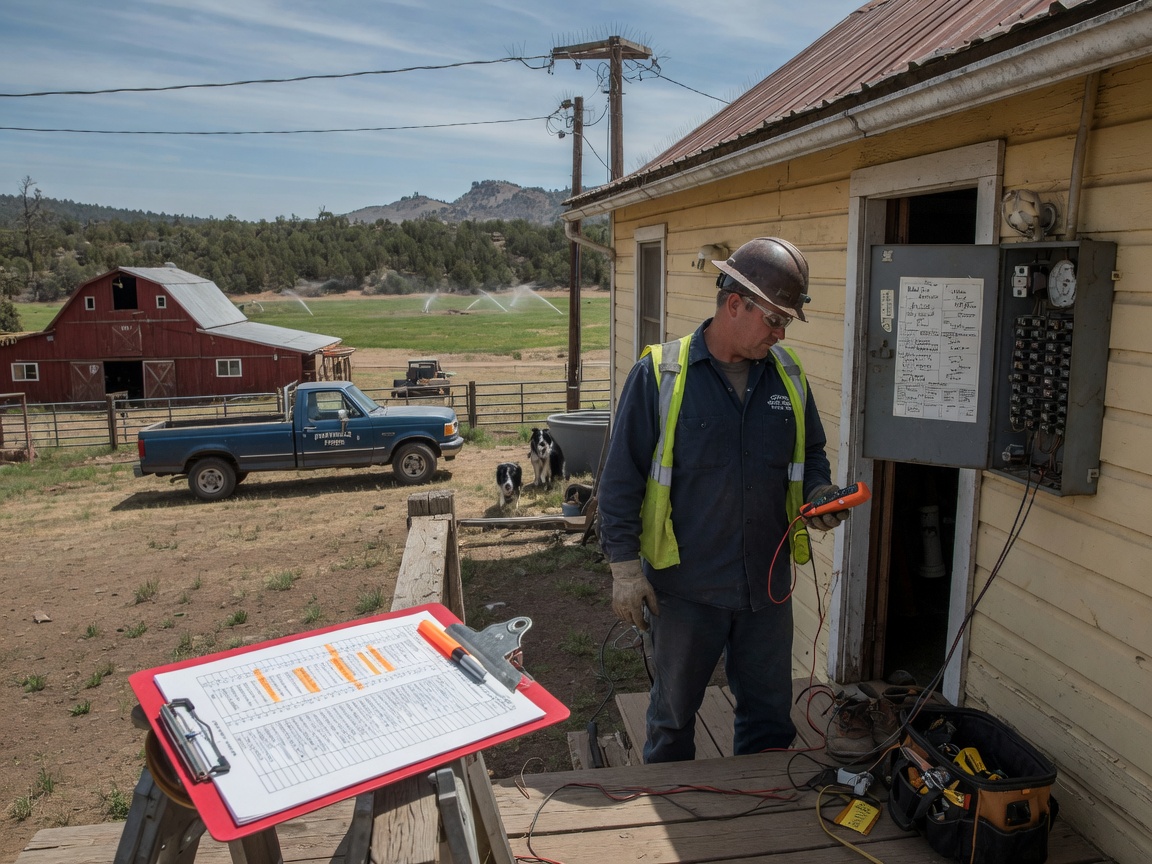
A thorough electrical safety check on a Prineville farm or ranch takes 2–4 hours for a typical property with a house, shop, and one or two outbuildings, and usually turns up 3–6 items worth addressing — from a rodent-chewed wire in a barn junction box to an undersized feeder running out to a well pump. Ranch electrical systems are different from a single-house circuit: you've got multiple panels, buried feeders running hundreds of feet, and equipment exposed to sun, dust, and hard freezes that a suburban Redmond home never sees. Skipping the annual check isn't just risky for equipment — it's a real fire and livestock-safety issue when wiring runs through hay barns and equipment sheds.
Why Ranch Properties Need a Different Approach Than a House
Most of the properties I check outside Prineville — toward Powell Butte, along the Crooked River, or up near Ochoco National Forest — have a main panel at the house and one or more subpanels feeding a shop, barn, or well house. Each of those subpanels is a separate point of failure, and each feeder run is exposed to freeze-thaw ground movement and rodent activity for its entire length. A house-only inspection misses all of that. I check main panel and every subpanel, verify grounding at each structure, and trace feeder condition wherever it's accessible, especially at conduit entry points where cracking lets moisture in during spring melt.
On older homestead-era properties in Crook County, it's common to find a subpanel that was added decades ago without a proper ground rod, or a feeder that's undersized for the load now running through it — irrigation pumps, welders, and shop tools draw a lot more than what the original wiring was sized for. If your main panel is original to a pre-1980s farmhouse, it's also worth reading about what to expect when upgrading your electrical panel, since a lot of ranch fire calls trace back to an overloaded 100-amp panel trying to run a modern shop.
Well Pumps, Irrigation, and Buried Wiring
Well pump circuits are one of the most common failure points I find on Crook County ranches. Pressure switches corrode, pump wiring insulation degrades underground, and the disconnect at the wellhead is often missing or non-functional — which is a serious problem if you ever need to kill power fast. I check:
- Wellhead disconnect is present, labeled, and actually switches the circuit off
- Wire insulation at accessible splice points shows no cracking or water intrusion
- Breaker sizing matches the pump's actual amp draw, not a guess
- Grounding at the well casing is intact, since a lot of older installs skipped this
- GFCI protection where required near irrigation control boxes
Buried feeders to pivot controls or stock tank heaters take a beating from ground freeze in January and expansion in July. If a breaker's been tripping intermittently on an irrigation circuit, that's not something to keep resetting — it usually means insulation has failed somewhere along the run, and finding it before a full rewire is needed saves real money.