2026-09-01 ·
Safe Generator Use During Prineville Power Outages
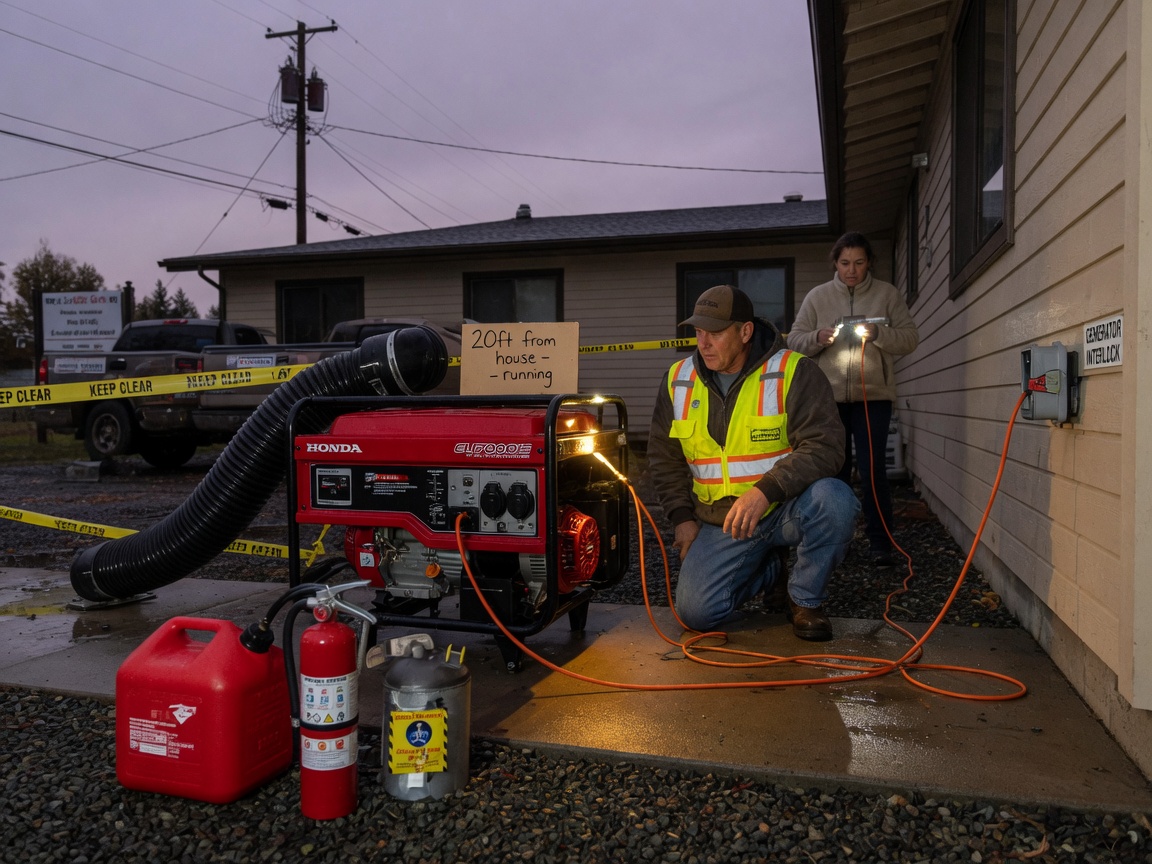
A portable generator can safely power a Prineville home's essentials — a well pump, refrigerator, furnace blower, and a few lights — as long as it's sized correctly, run outdoors at least 20 feet from windows and doors, and never backfed into household wiring without a transfer switch. Most outages here come from summer thunderstorms that knock down lines near Ochoco National Forest or winter ice loading on the lines feeding out toward Powell Butte and Terrebonne. Both scenarios can leave a property dark for anywhere from a couple hours to a couple days, which is long enough for a poorly set up generator to become the bigger hazard in the house.
Sizing the Generator Correctly
Undersized generators are the most common mistake I see on service calls after an outage. A well pump alone can draw a surge load of 2,000–3,000 watts on startup even though it only needs 700–1,000 watts to run continuously, and if the generator can't cover that surge, it'll trip or stall repeatedly. For a typical 1,800–2,400 square foot home in Prineville or out toward Culver, a 7,000–10,000 watt generator usually covers a well pump, furnace blower, fridge, and some lighting circuits at once. Smaller 3,000–4,000 watt units are fine for a fridge and a few lamps but won't run a well pump and furnace together. If you're regularly losing power for more than a few hours a year, it's worth having an electrician calculate your actual startup and running loads rather than guessing off the generator's box label.
Never Backfeed the Panel
Plugging a generator directly into a wall outlet to power the house — known as backfeeding — is illegal in Oregon and can kill a utility lineworker restoring power on your street, because it sends electricity back out through the meter onto the grid. It also risks frying your own appliances and the generator itself if the incoming utility power returns while it's still connected. The only safe way to connect a generator to your home's wiring is through a properly installed transfer switch, which isolates the house circuits from the utility line before the generator's power reaches them. If you're running extension cords to individual appliances instead, that's actually safer than backfeeding, just less convenient. For anyone tired of running cords every outage, generator installation with a transfer switch is a one-time job that makes every future outage a lot less stressful.
Carbon Monoxide and Placement
Generators produce carbon monoxide fast, and it's the single biggest killer in generator-related incidents nationwide. Run the generator outdoors on a dry, level surface at least 20 feet from any window, door, or vent — including garage doors left cracked open, which don't count as adequate ventilation. During a winter outage when Prineville temperatures drop well below freezing, the temptation to move the generator into a garage or covered porch is strong, but carbon monoxide can pool there and drift into the house through door seals. A battery-powered carbon monoxide detector inside the home is cheap insurance during any outage, since your usual detectors may be offline along with everything else.
Fuel, Cords, and Weather
Keep the generator dry — a simple canopy or generator tent works if you're running it in rain or snow, but never operate it under a tarp draped directly over the unit, since that traps heat and exhaust. Use heavy-duty outdoor-rated extension cords (12-gauge or thicker) rated for the wattage you're pulling; thin indoor cords overheat and are a fire risk when running a furnace blower or space heater. Store fuel in approved containers away from the house, and don't refuel a hot generator — let it cool 5–10 minutes first. In the high desert climate around Prineville, summer heat can also cause a generator to overheat if it's placed in direct sun for hours, so shade or partial cover extends both its run time and its lifespan.
When to Call an Electrician
If your outages are frequent enough that you're setting up a generator more than once or twice a year, a permanent standby setup with an automatic transfer switch is worth pricing out — it starts itself within seconds of an outage and needs no cords at all. This is also the safer option for households with a well pump, medical equipment, or livestock watering systems out toward Terrebonne or Metolius where losing water pressure for days isn't an option. While you're at it, have an electrician check your panel's condition; older breakers that trip erratically can complicate a generator hookup, and it's worth reading up on understanding circuit breaker trips in Prineville homes if yours has been acting up. Prineville Electrician Pros, based at 1565 NE 3rd St, is open Mon–Fri 8am–6pm and Sat 9am–2pm for generator sizing, transfer switch installs, and panel inspections before the next storm rolls through Crook County.