2026-09-01 ·
Understanding Circuit Breaker Trips in Prineville Homes
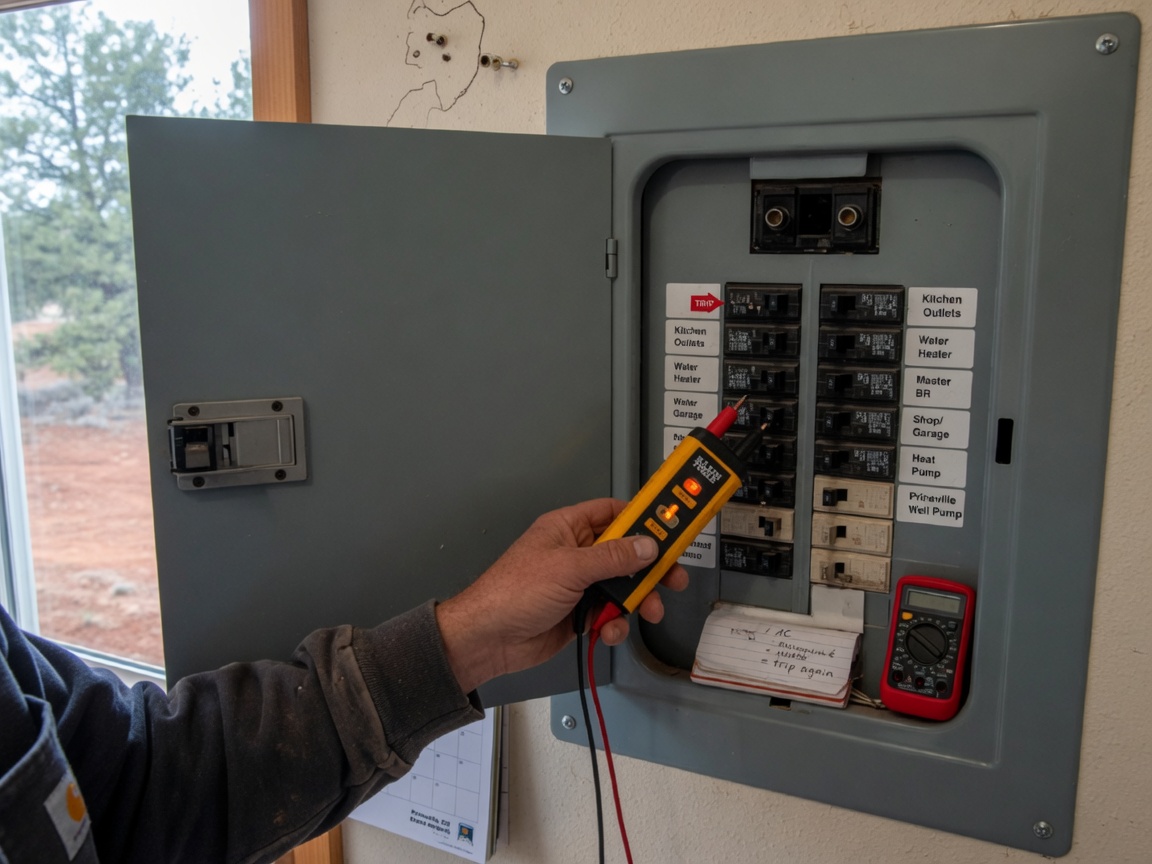
A circuit breaker that trips once in a while, usually right when the AC kicks on during a 95°F July afternoon or when a space heater and the toaster run at once, is almost always just the breaker protecting the wire from overload — that's normal and by design. What's not normal is a breaker that trips repeatedly on the same circuit, trips with nothing plugged in, or trips within seconds of being reset. Those patterns point to a real problem: an overloaded circuit, a failing breaker, or a wiring fault somewhere between the panel and the outlet, and they're common enough in Prineville homes that we get calls about them year-round.
Why Breakers Trip More in Prineville Specifically
Crook County's high desert climate puts real seasonal stress on home electrical systems. Summers push window units and central AC hard for months, and winters bring long stretches of subfreezing nights where electric baseboard heat, space heaters, and heat tape for pipes all run at once. Homes built in the 1970s–90s around Prineville, including a lot of the stock near Downtown, were wired for a much lighter electrical load than what modern households actually draw today — a few window AC units and a microwave were never part of the original panel math. When we get service calls in August and again in January, it's rarely a coincidence; it's the same underlying capacity issue showing up at both extremes of the temperature swing.
Common Causes We Actually Find
After years of pulling panel covers around Prineville, the causes tend to repeat:
- Overloaded circuits — too many high-draw devices (space heaters, window ACs, hair dryers) sharing one 15- or 20-amp circuit
- Worn-out breakers — breakers weaken with age and start tripping under loads they used to handle fine, especially in panels 20+ years old
- Ground faults and short circuits — often from wiring that's been chewed by rodents in a crawlspace or damaged by moisture
- Loose connections — vibration and thermal expansion over years can loosen a breaker or wire lug, causing arcing and nuisance trips
- Undersized panels — a lot of older homes still run 100-amp service, which is tight if you've added a hot tub, EV charger, or shop
If you're seeing warm outlet covers, a burning smell, or discoloration around the panel, stop resetting the breaker and call someone — that's a fire risk, not an inconvenience.
Reading the Pattern Before You Call
The details matter more than most homeowners assume. A breaker that trips only when you run the microwave and toaster together is a load problem — you're asking one circuit to do too much. A breaker that trips the moment you flip it, before anything is even plugged in, points to a short in the wiring itself or a bad breaker. A breaker that trips only in summer heat or after the panel's been in direct sun for hours can mean the breaker itself has weakened and needs replacing. Keeping a rough log of when and under what conditions a breaker trips gives an electrician a huge head start diagnosing it correctly instead of guessing. This is one of the same troubleshooting habits we recommend when looking at common electrical issues in older Prineville homes, where aging wiring and modern loads collide most often.
What Fixing It Actually Involves
Most of the time, the fix is one of a few things:
- Redistributing load — moving a circuit's devices to different breakers so no single line is overloaded
- Replacing a worn breaker — a straightforward swap, usually $150–$350 depending on the breaker type and panel access
- Repairing damaged wiring — cost varies widely, from $200 for a simple splice repair to over $1,500 if wiring needs to be pulled through walls or a crawlspace
- Panel upgrades — if your home is still on 100-amp service and tripping breakers regularly, an upgrade to 150 or 200 amps solves the root problem rather than treating symptoms