
2026-09-01 ·
How to Install GFCI Outlets in Kitchens and Bathrooms
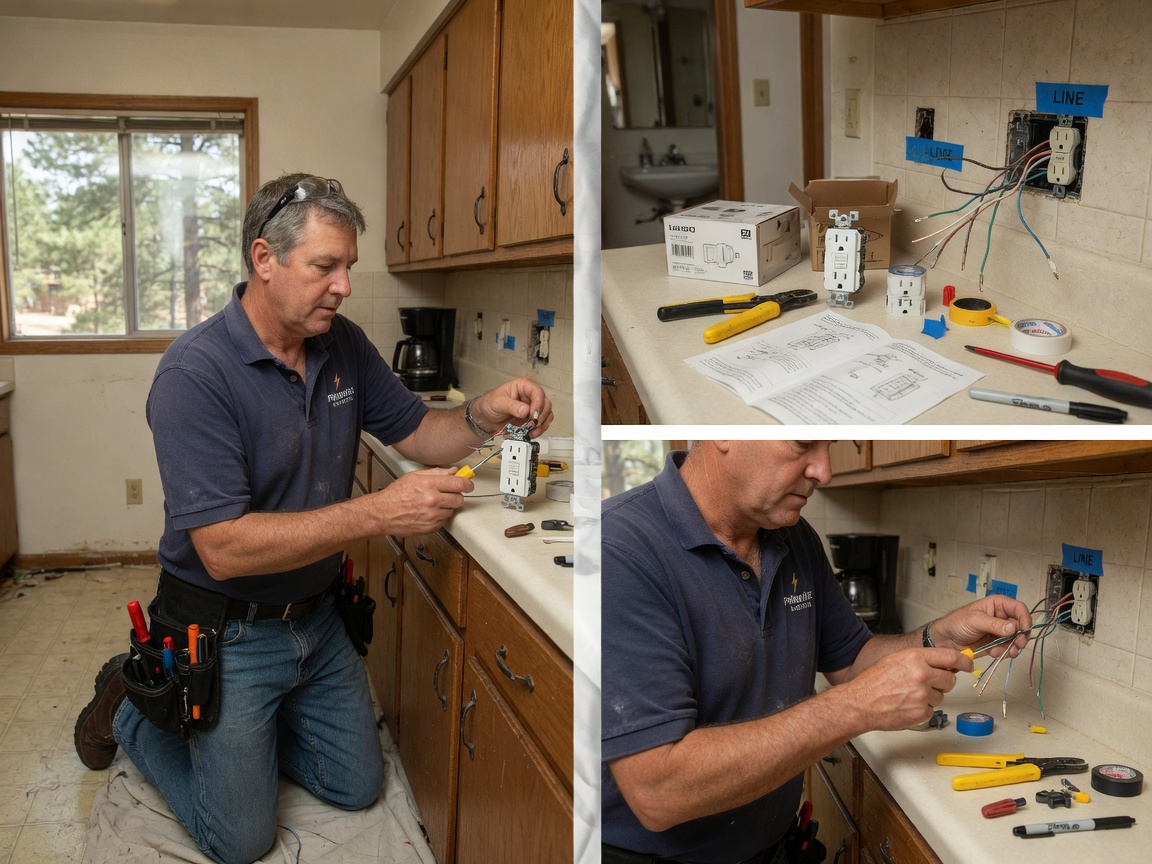
Installing a GFCI outlet correctly takes about 30-45 minutes per location once the power is confirmed off and the box is accessible, and costs most homeowners $15-$25 per device if wiring is already in good shape. The harder part isn't the wiring diagram—it's knowing whether your kitchen or bathroom circuit is set up for a simple swap or whether it needs upgraded wiring first. Here in Prineville, where a lot of housing stock near Downtown and out toward Ochoco National Forest dates back decades, that second scenario comes up more often than folks expect.
Why Kitchens and Bathrooms Need GFCI Protection
Ground-fault circuit interrupters shut power off in a fraction of a second if they detect current leaking somewhere it shouldn't—like through water, or through you. Kitchens and bathrooms are the two rooms where water and electricity are constantly close together: dishwashers, garbage disposals, hair dryers, curling irons. Current code requires GFCI protection on all kitchen counter receptacles and every bathroom outlet within reach of a sink. If your Prineville home still has standard outlets in these rooms, you're one dropped hair dryer away from a serious shock, not just a tripped breaker.
Tools and Materials You'll Need
- Non-contact voltage tester
- Flathead and Phillips screwdrivers
- Wire strippers
- GFCI outlet rated for the circuit's amperage (15-amp or 20-amp)
- Wire nuts and electrical tape
- Weatherproof cover if installing outdoors or in a garage
Buy a GFCI rated to match your circuit—most kitchen and bath circuits in Crook County homes run 15-amp or 20-amp, and installing the wrong rating is a common mistake that trips inspections later.
Step-by-Step Installation
- Kill the power at the breaker and confirm with a voltage tester before touching any wires—don't trust the breaker label alone, especially in older Prineville homes where panels have been added to or relabeled over the years.
- Remove the old outlet and note wire positions: black (hot), white (neutral), bare or green (ground).
- Identify line versus load wires if this outlet feeds other downstream outlets—GFCIs have separate LINE and LOAD terminals, and reversing them will cause nuisance tripping or leave downstream outlets unprotected.
- Connect wires to the correct terminals, tighten securely, and tuck them into the box without crowding.
- Screw the GFCI into the box, attach the cover plate, restore power, and test using the outlet's built-in test/reset buttons.
Where This Gets Complicated in Older Prineville Homes
Plenty of homes near the Crook County Courthouse and in Prineville's older Downtown blocks were wired before three-prong grounded outlets were standard. If your box has no ground wire, a GFCI still provides shock protection, but you'll need to label it 'No Equipment Ground' per code—it's not a full substitute for proper grounding. Some kitchens also share a single circuit across multiple counter outlets, which was legal decades ago but overloads fast with modern appliances. If you find aluminum wiring, undersized boxes, or a panel that's clearly maxed out, that's a sign the bigger issue isn't the outlet—it's the wiring behind it or the panel feeding it. We cover a lot of these patterns in our piece on common electrical issues in older Prineville homes.
Seasonal Considerations
Prineville's high desert climate means hot, dry summers and genuinely cold winters, and that temperature swing affects outlets more than most homeowners realize. Plastic outlet housings and wire insulation can become brittle after years of seasonal expansion and contraction, especially in uninsulated exterior walls common in older builds near Prineville Reservoir State Park. If you're replacing an outlet that feels loose in the box or has cracked insulation, that's often age and temperature cycling talking, not just wear from use. It's worth checking nearby outlets on the same run while you're in there.